
For September 2024, the Community Archives and Heritage Group Awards Committee are very excited to announce Birmingham People’s History Archive (BPHA) as the Group of the Month.
About the group
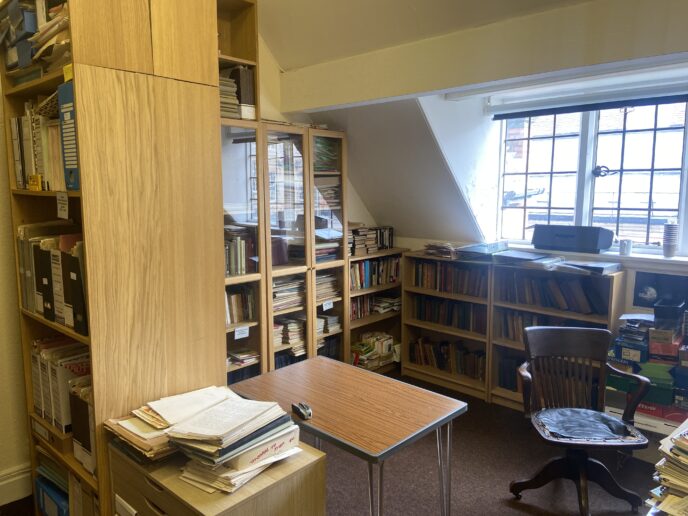
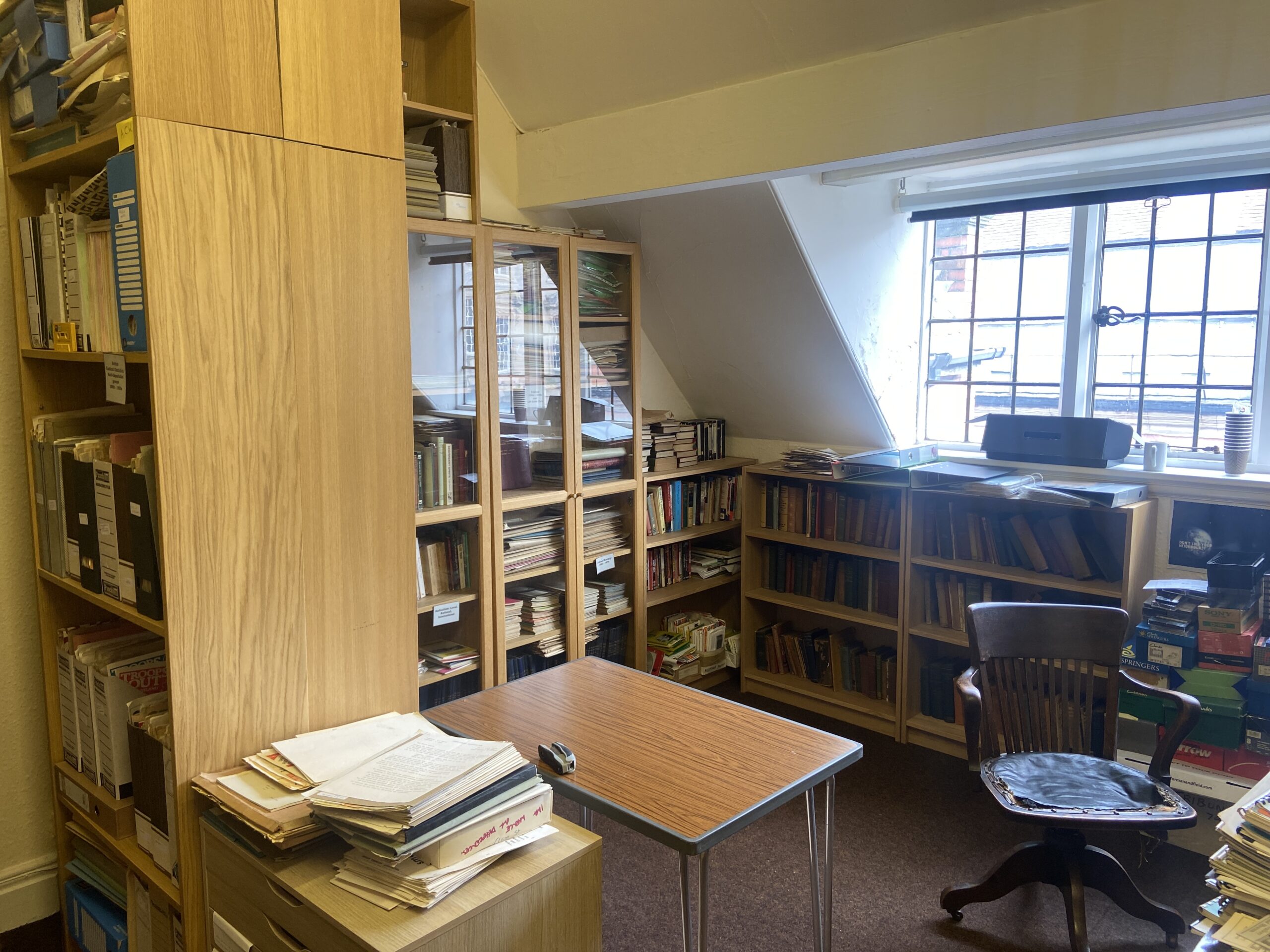
The BPHA was established in 2021 with collections of materials related to the social history of the West Midlands and Britain acquired over two decades. To these collections was added a library from the estate of George Barnsby, a noted social historian of Birmingham and the Black Country.
Thereafter BPHA have been lucky enough to receive collections from the family of Albert Knight—railwayman, trade unionist, and one of the original purveyors of independent working class education in Britain; personal archives from the estate of Malcolm Chase, a social historian of the Chartist movement; and minute-books and documents from the West Midlands branch of the Communication Workers Union, among many others.
They are a small team of dedicated amateurs who have undertaken this work as a labour of love, and as a means of preserving the rich industrial and social heritage of the West Midlands for younger generations now and in the future. Through valuable connections with Birmingham University and Aston University, they have been able to provide plentiful volunteering opportunities for undergraduate and postgraduate students.
Similarly, generous grants from Historic England, the National Archives, and the Social History Society have enabled them to expand into the collection of oral histories and the training of oral historians, as well as presenting the fruits of this work in schools across Birmingham.
We asked the group about the communities that work with and how they engage with them. BPHA told us:
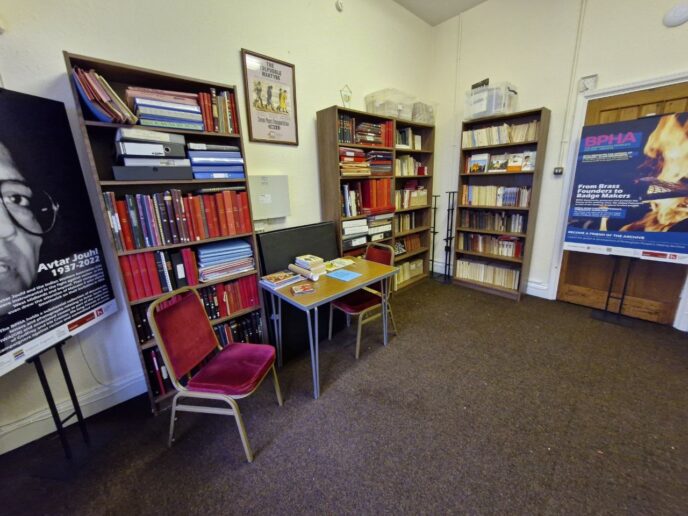
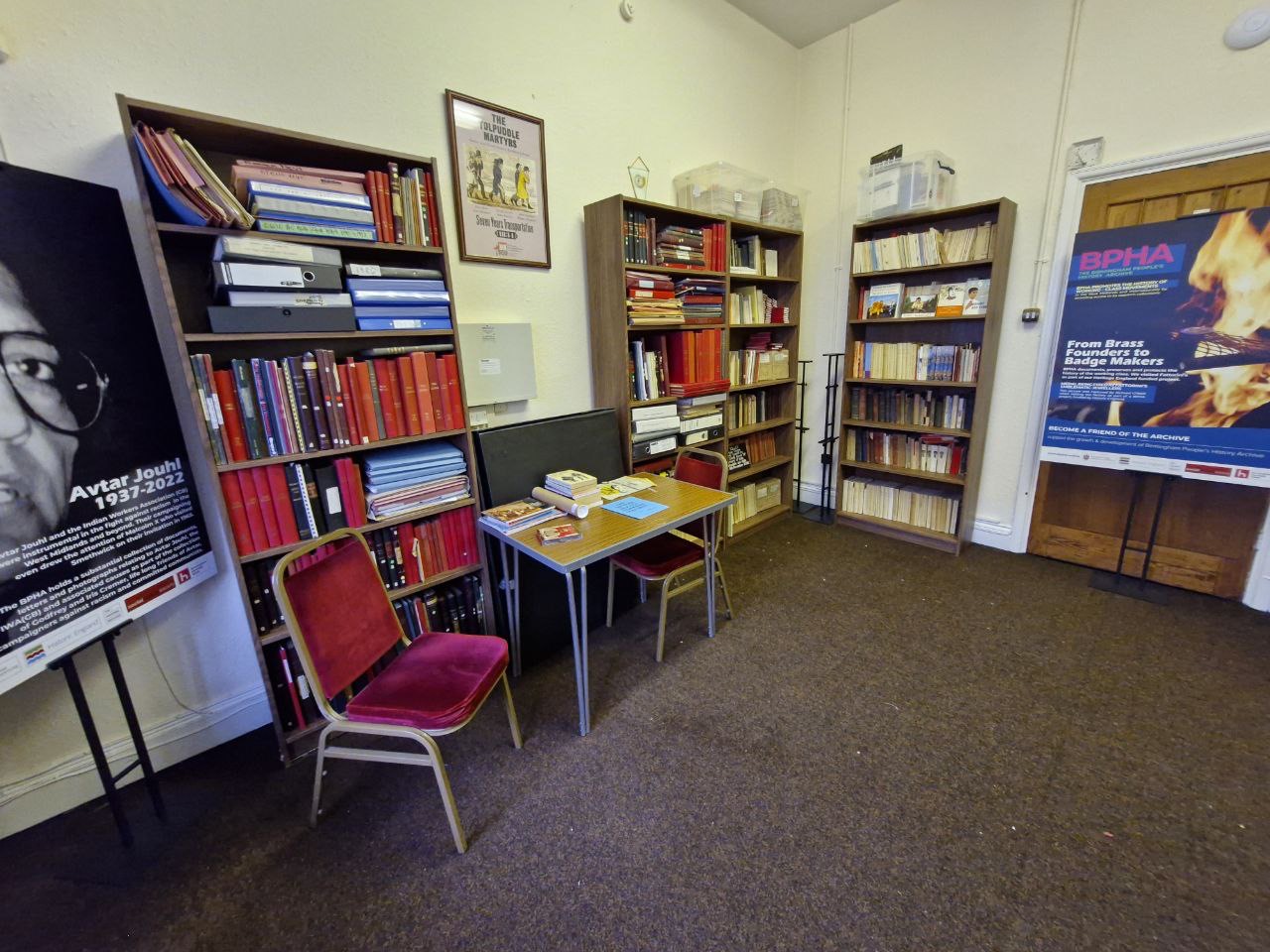
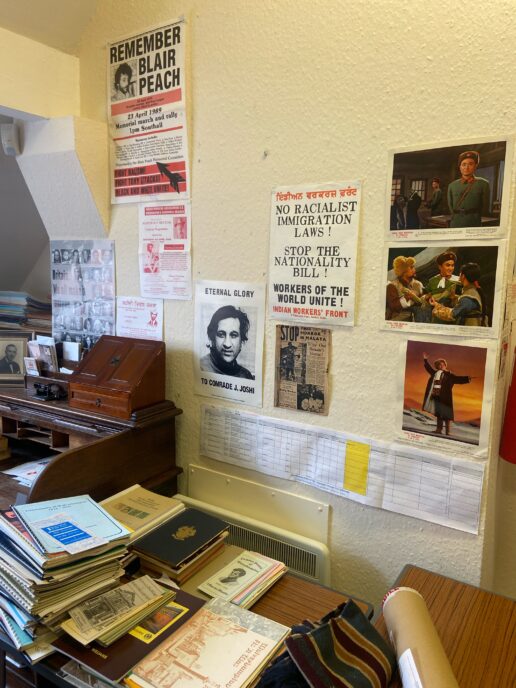
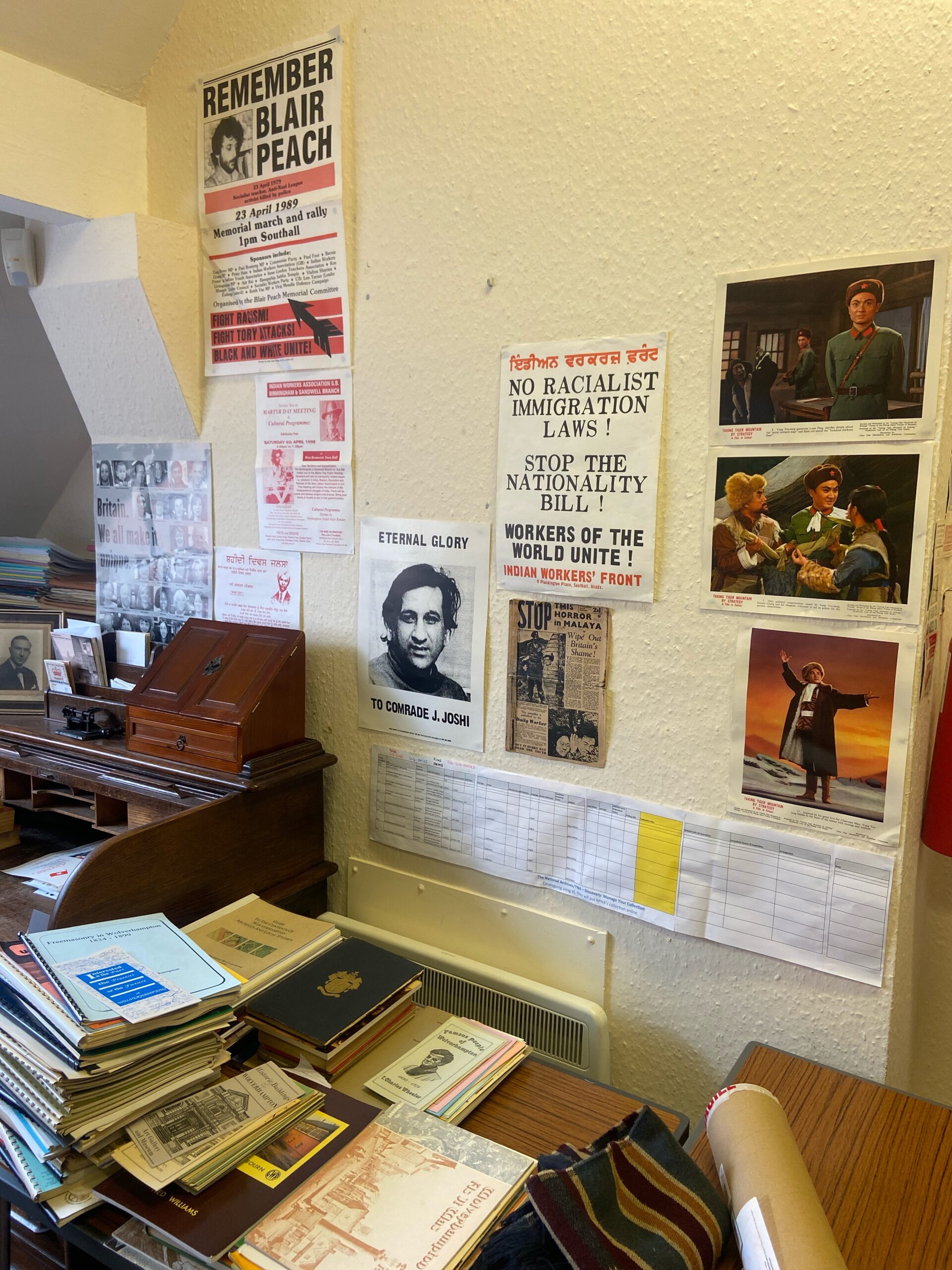
One section of our archive holds extensive historic documents related to the Indian Workers Association from the 1960s to the 1990s, from Birmingham, Coventry, and Southall, covering activities such as the Campaign Against Racialist Laws and the struggle against the National Front. On this basis we cooperated with good friends in the Shaheed Udam Singh Welfare Centre to commemorate the life and work of Avtar Jouhl, a committed fighter for social justice and workers’ rights in Birmingham.
At a time in which ethnic tensions and racism once again are on the rise on our streets, it is through this preservation of the struggles of the past, commemorating them and remembering them to a new generation, that our archive can play a small role in providing crucial education for working class communities of all backgrounds.
Our work in oral histories has enabled us to bring the stories of Birmingham’s industrial past—featuring heavily the narratives of Irish, Indian, and Pakistani immigrants—into schools to elicit creative, artistic responses from primary, secondary, and special needs pupils.
We also organise community trips to areas of local interest. Last year, we brought our members and supporters (and their families) on a hosted bus trip to Nottingham Industrial Museum, which proved of great interest both to the retired workers who participated in our oral histories project, as well as to all the children who came along too.
The awards committee also asked how their work has contributed to preserving community heritage and broadened the appeal of community archives to a wider group of people and we were told:
We see ourselves not merely as a repository of dusty old documents, preserved for their own sake. We believe we have an educative mission. One aspect of that mission has been the hosting of a yearly winter session of talks, given by the directors of the archive, on various facets of labour history in the West Midlands. These have been held in the archive itself, showcasing some of our core materials, and have been well-attended and received.
These have been supplemented by visiting lectures from academics who are supportive of our work, including Kevin Morgan from the University of Manchester and Ilaria Scaglia at Aston University. These lectures have helped us project the name and the mission of the archive to new audiences.
Likewise, our ongoing participation in Birmingham Heritage Week, held annually in September, has enabled us to engage with members of the public keen to explore what the city’s heritage sector has to offer. We have presented not just exhibitions of children’s artwork and videos of our oral histories, but also re-enactments of Birmingham volunteers in the Spanish Civil War.
Another reason we sought to establish the archive was in order to open the materials to external researchers. Since our founding, we have been visited by an impressive range of scholars and researchers—ranging from interested undergraduates studying for the dissertation, postgraduates engaged in doctoral research, as well as groups of artists seeking materials to inform their own projects.
When we asked for examples of running activities that have beneficial impacts on the physical, mental and social wellbeing of individuals and communities, we were told by the group that:
The main activity that comes to mind is our trip to Nottingham Industrial Museum in August 2023. Thanks to a generous grant from Historic England, we were able to organise for our friends, participants and supporters a free coach trip and day out to this fascinating museum of Midlands industrial history.
Many of these supporters are young families for whom a day out to a novel location was greatly appreciated. Nottingham Industrial Museum has plenty to interest young children as well as their parents, so we all felt that this was a hugely enjoyable activity. We are seeking to do, at least one of these, every year.
Further, our oral histories project has proven greatly satisfying, in several ways. First of all, for the interviewees participating in it—they have all remarked how enjoyable it has been to share their stories of an industrial world and working lifestyles that are part of a disappearing world.
Second, it has been an opportunity to provide our student volunteers with new skills—whether that has been conducting the interviews themselves, managing audiovisual technology, or working to transcribe the recorded interviews. Finally, that we have been able to conduct outreach among students of various ages, backgrounds, and abilities, and help to teach them about the rich industrial legacy that previous generations have left in Birmingham.
We asked the group to try and describe what (or maybe who!) they thought makes them special and they told us:
It's impossible really to single out any one individual, as the archive to date has been an incredible collective effort.
Our volunteers have, without exception, gone above and beyond in their work with us. Whether they have come for high school work experience, through undergraduate schemes, or for postgraduate experience in the archival and heritage sector, each has brought their own individual skills, interests, and personality to the archive.
Two participants do deserve special mention, however. One is our volunteer supervisor, Gillian, who have given up significant time out of her retirement to ensure we not only have a constant stream of volunteers coming in, but that they are all put to use as well. She has taken the lead in accessioning new material, organising activities for Heritage Weeks, building relationships with schools for outreach, arranging speakers for lectures, and so much more.
Another volunteer who has certainly helped with innovation has been Poppy, who first came to the archive as an undergraduate student at Birmingham University. Poppy underwent oral history training with us, and now in processing our recorded interviews they have been using state-of-the-art, open-source AI transcription software to enable us to reprint these interviews in full.
Given that all these interviews range between one and two hours in length, it would be out of the question for one of our small team to undertake full transcription by hand. Further, it is a satisfying fusion of the history and the future of human industry, that these stories of Birmingham's industrial past can be captured in high fidelity using the very latest cutting-edge technology.
We’re sure you can see why we’re so happy to be able to acknowledge the wonderful work of BPHA and you can find out more about them online.
Website - https://bpha.online