
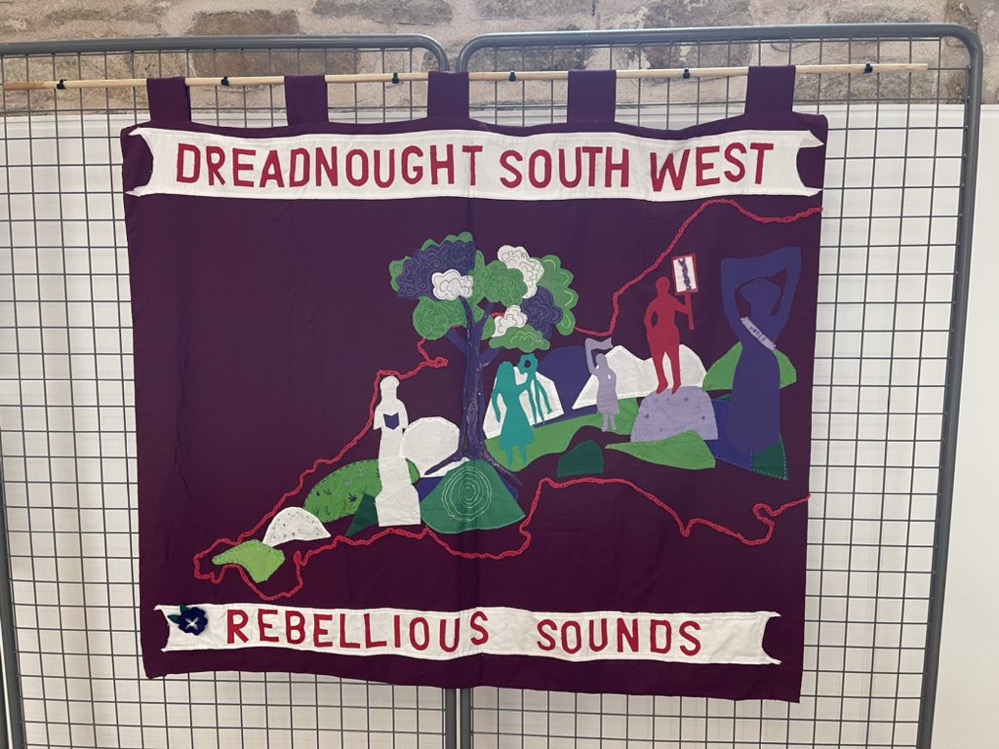
With March being the month to celebrate International Women’s Day, the CAHG awards committee are pleased to announce Dreadnought South West as this month’s featured group.
We chatted to Natalie McGrath who’s a co-director for the organisation and asked her to describe what Dreadnought South West is all about.
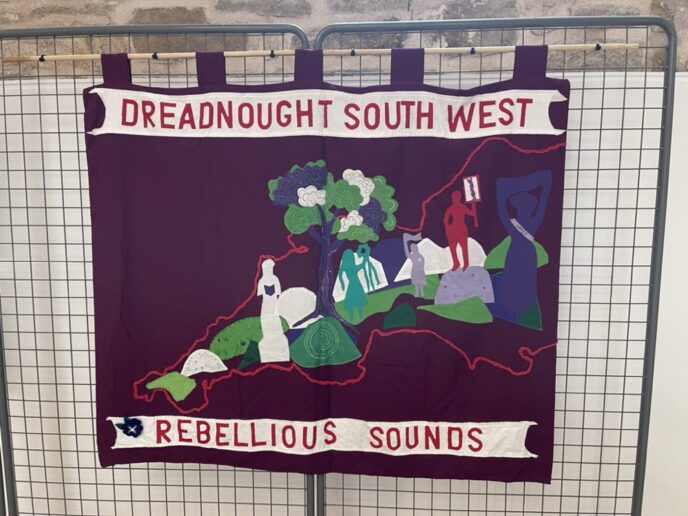
Dreadnought South West is an intersectional feminist arts and heritage charity based in Exeter, working when and where they can across the South West region. We have made theatre shows and toured them, radio and audio content and production through an annual venture called Occupy the Airwaves, and we are the guardians of The Rebellious Sounds Archive, the UK's only collection of women and non-binary people's oral stories of activism and social change making in the South West region. We work with a wealth of artists, activists and community leaders, cultural champions and change makers in their communities through crativism, song writing and choirs and other forms of social creative gatherings. We do this to discover, to share and illuminate the untold stories about women, and to redress the imbalance in what stories get told. Less than one percent of recorded history is about women. So we have a wee bit of catching up to do!
Tell us about the communities you work with and how you engage with them.
We have made two touring theatre shows; Oxygen and The Cause, taking them to a wide range of communities across the South West region. We began with Oxygen, a new play created by Dreadnought South West - Written by Natalie McGrath and Directed by Josie Sutcliffe, in 2013 which saw the launch of Dreadnought South West. Oxygen told the story of the great 1913 Women's Pilgrimage, where suffragist women walked from Lands End to Hyde Park to demand their right to vote, through peaceful protest. We engaged with quite a few of the communities where the women from 1913 stopped and rallied to find out more about their connections to the heritage of this story, which in turn added to the making of the play, and to waymarker projects that each community chose to do as we toured. It was really exciting to meet people who had discovered that their great grandmothers had either been on the pilgrimage or that it has passed through their town. Adding to the heritage along the way.
In Exeter we engage with a diverse range of women from across the city to annually produce Occupy the Airwaves, a 16 hour community radio broadcasting marathon on Exeter's Phonic FM, on International Women's Day. Here we have produced a mix of live and pre-recorded programmes, and this year is our tenth year of doing so! We have hosted programmes that include LGBTQ+ women, Windrush Women, Women in Farming, Roller Derby Women, a wide range of artists and activists, including climate activists, the first English Arabic programme on Phonic FM, we've worked with punks, poets, writers, academics, rappers, Mothers Who Make, choir leaders, musicians, Co-Lab's Resilient Women Project, DRCSAS (Devon Rape Crisis & Sexual Abuse Service), Fawcett Devon, Institute of Islamic and Arabic Studies at the University of Exeter, Devon Development Education to name a few of the groups and individuals that we have collaborated with to make this happen over the years! Occupy creates a unique community across the day that might not always necessarily meet.
We asked Natalie how she felt Dreadnought’s work had contributed to preserving community heritage and broadened the appeal of community archives to a wider group of people.
Oxygen and The Cause looked back to the past to explore and tell new stories about women's fight for suffrage. The Rebellious Sounds Archive, was our next venture, which collects stories now about women and non-binary people's activism and social change making in their communities. It is in the form of a touring mobile listening installation, which has toured to over 30 locations across the South West region - taking the archive collection to people is a way we think can reach out to a wider pool of people, who might come across it without expecting to. It has toured to heritage venues, arts centres, archives, libraries, community centres, shops, theatres and Devon County Council. It is also digital so people can access extracts from all the stories via our website either as an audio or by transcription. The whole archive feels like a community of voices and stories that we keep adding to as it tours around, when we are in a funded phase, in this way it continues to grow and be open to suggestions of who might contribute to it.
We asked about impact heritage and community archives can have on the physical, mental and social wellbeing of individuals and communities.
Our most recently funded project thanks to Heritage Fund enabled us to have some residencies, one in Cornwall in Redruth at Kresen Kernow and another at Exeter Central Library. Both of which allowed for space and time to be with people in a gentle way, to talk, make and listen, share stories and connections, or to listen to a talk or choirs singing. It is clear that as the pressure on us all to speed up and do more continues, creating spaces that slow things down are crucial to us all to bring about a sense of community, which in turn we believe supports our wellbeing and health.
Finally, we asked Natalie to reflect on what makes Dreadnought South West special.
We try to work always with a lot of heart and love in our work. This feels so important to us that we try to work from a point of care and hope and share whatever resources that we have when and where we can. As artists we are driven by our creative vision, which in turn impacts on how we think about heritage and how we might share a heritage that has not been told before in new and exciting ways. Most importantly we love to connect with people and to connect them to one another. It was amazing in 2023 to return 10 years later to celebrate Dreadnought and the original project Oxygen that began it all. People came back after 10 years, who had continued to sing the songs over that decade, and joined in again and walked with us from Lands End to St.Just, sharing their stories and telling us how us telling that story of the women who walked in 1913 had made an impact on them, how it has made them want to tell more stories about women and to discover more about the heritage of women in our region. In a way that's what really matters to us: the stories that get told that make a difference to who we are and how we live, and how we can all find ways to tell and share them.
You can find out more about Dreadnought South West on Facebook and Instagram.