
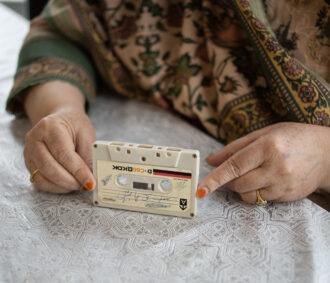
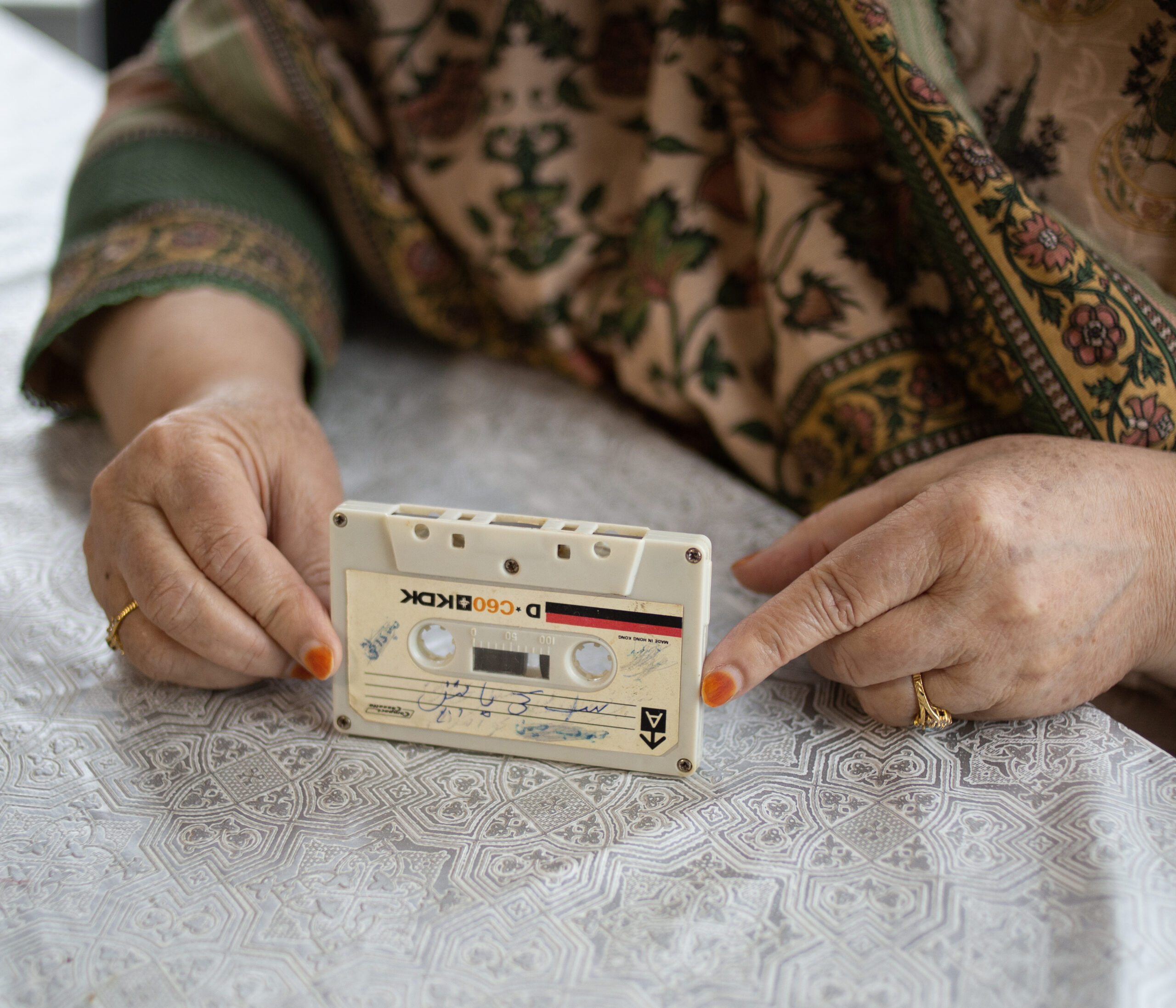
Tape Letters Scotland is a social history project highlighting the use of audio cassettes as an unorthodox mode of long-distance communication by the Pakistani diaspora in Scotland between 1960–1980.
Drawing directly from first-hand interviews carried out by the project team and the informal, intimate conversations recorded on cassettes, the exhibitions showcase the experiences of members of Scotland’s Pakistani communities, exploring the topics of migration, identity, communication and language.
A precursor to the modern-day voice-note, sending physical audio cassette recordings became popular amongst British-Pakistani communities between the 1960s and the 1980s to communicate with friends and relatives in Pakistan. The format offered a cheaper alternative to international telephone calls while providing a more accessible option for those unable to read or write letters. However, the practice has since remained largely unknown to many, even within British-Pakistani communities, with many original tapes lost or later recorded over. Tape Letters is a pioneering project produced by Modus Arts, which aims to unearth, archive, and represent a portrait of this method of communication for communities during this period.
The archive is held at the National Library of Scotland and contains 20 cassette tapes and 80 oral histories gathered from individuals and families living across Scotland’s central belt.