
LBHRG is a community-based organization dedicated to uncovering and sharing the rich history of Liverpool’s Black community. Our mission is to promote understanding and reparative justice by confronting difficult aspects of history, inspired by Pastor Daniels Ekarte, founder of the African Churches Mission, who said:
My people believe that the problems of the present and the future could be solved through a careful and sympathetic study of the past.
Our Objectives
We aim to challenge misleading narratives, particularly those that focus solely on abolition, by documenting and recognizing the true impact and legacy of the slave economy and the contributions of people of African descent. Through our projects, we strive to reshape Liverpool’s understanding of its history, contributing to a more inclusive and equitable future.
Key Projects
Our collection of historical records highlights Liverpool’s connections to the transatlantic slave trade and include:
- Research including genealogy: Investigating the founders and shareholders of Liverpool’s Royal Institution, Mechanics Institute, Infirmary, and Athenaeum identifying those with ties to the slave economy. We hold records into more than 400 individuals, predominantly from the merchant class.
- Research driven activism: Challenges institutions and businesses to be transparent about their historical foundations.
Major Initiatives
- Challenging Institutions: Urging two city universities and Liverpool’s Athenaeum to acknowledge their connections to the slave economy, leading to collaborative projects.
- Retain to Explain: Securing listed building status for Bark Hill, a former slave merchant’s house, so thwarting its demolition.
- Education in the Public Realm: Lobbying the City Council to install slavery interpretation plaques and to reinterpret historic portraits in civic buildings.
- Youth Engagement: Launching the Liverpool Schools Prize to foster a new generation of informed citizens.
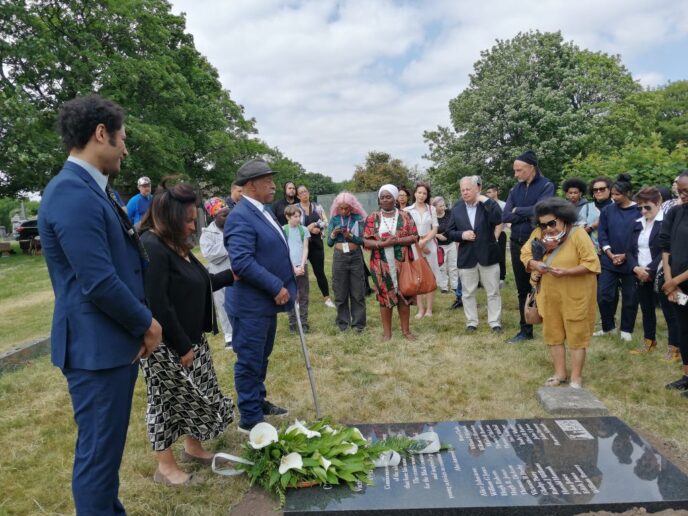
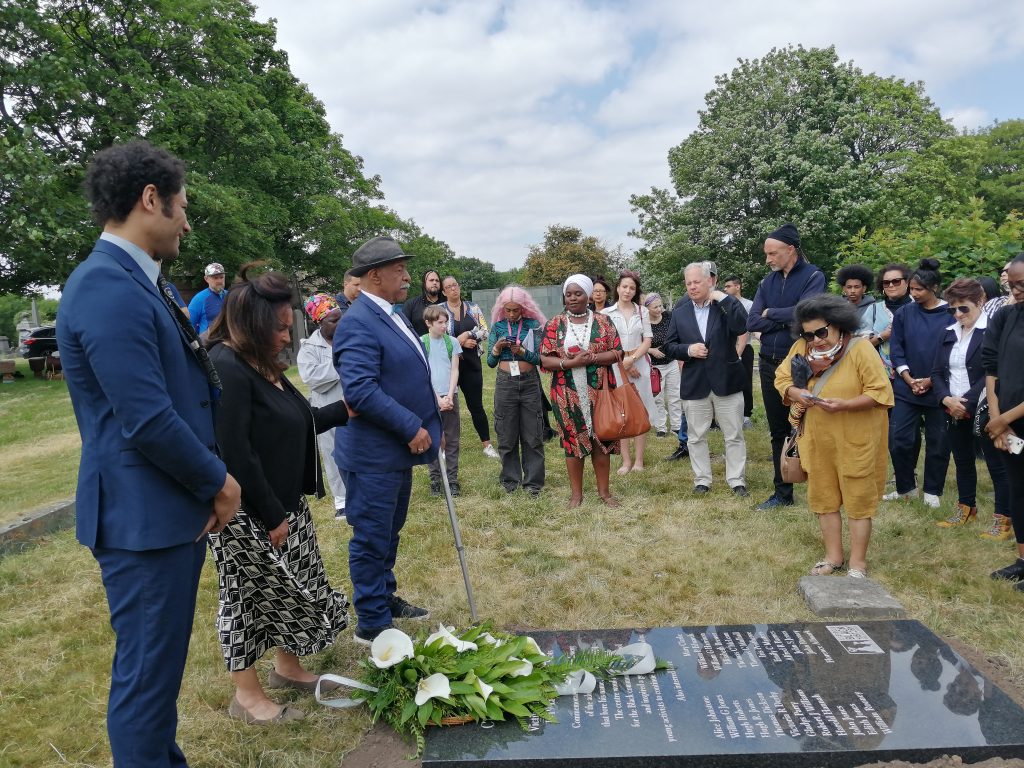
- Commemoration: Hosting community events and placing memorials on unmarked graves, highlighting the legacy of Charles Wooten, killed in 1919 race riots, and Pastor Daniels Ekarte, founder of the African Churches Mission.
- Commissioned Research: Conducting research for National Museums Liverpool, informing its Waterfront Transformation Project.
Future Plans
We aim to expand our educational outreach through:
- Digitization of Archives: Making our research and connected archives more accessible for public engagement and research opportunities.
- Widening Challenges: Including financial institutions and partnering with American universities for a global perspective.
- Public Events: Hosting exhibitions, talks, and guided walks throughout the year to share our research findings and celebrate the achievements of Liverpool’s Black community beyond Black History Month.
- Collaborative Research: Partnering with academic institutions, museums, and organizations for in-depth studies. It is hoped this will include the Diocese of Liverpool as part of the Church of England’s slavery truth telling project and input into plans celebrating the bicentenary of the Liverpool to Manchester Railway in 2030.
- Commemoration Events: Developing programs to honour over 300 years of continuous Black presence in Liverpool, highlighting ongoing contributions to the city’s cultural and economic life.
By uncovering and sharing these histories, LBHRG aims to ensure that the contributions and experiences of Liverpool’s Black community are accurately documented and widely recognized, fostering a more inclusive future.